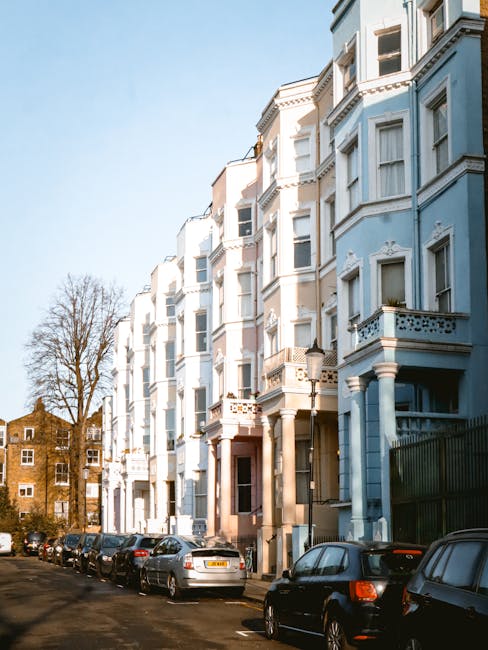
RBKC Permits for Removals in Notting Hill: A Quick Guide

If you are moving in Notting Hill, the paperwork can feel more annoying than the lifting. But RBKC permits for removals in Notting Hill are one of those details that can quietly make or break moving day. Miss them, and you could end up circling for kerb space, delaying the van, or paying for avoidable downtime. Get them right, and the whole move feels calmer, cleaner, and far less frantic.
This quick guide explains what these permits are, when you may need one, how the process usually works, and what to watch out for if your property sits on a busy street, in a controlled parking zone, or near tight terraced roads where access is never quite as easy as it looks on a map. To be fair, that describes a lot of Notting Hill.
Why RBKC Permits for Removals in Notting Hill: A Quick Guide Matters
Notting Hill is a lovely place to live, but it is not exactly built for a giant van parked awkwardly outside your front door. Narrow streets, resident bays, visitor restrictions, yellow lines, and the simple fact that London traffic rarely behaves itself all make moving day more complicated than it needs to be. That is where RBKC permit planning comes in.
RBKC stands for the Royal Borough of Kensington and Chelsea, the local authority covering Notting Hill. For removals, the practical issue is usually parking and loading access. A removal van may need legal space close to the property, and in some situations the operator may need to arrange permission or a parking suspension so loading can happen without a ticket, complaint, or a very stressed driver pacing the pavement.
Why does this matter so much? Because a removal is timed work. If the van cannot stop where it should, the move slows down almost immediately. People start carrying boxes farther than planned, furniture gets held back, and the whole day gets longer. And once a move turns into a waiting game, everybody feels it.
In our experience, the difference between a smooth move and a messy one is often not the packing. It is the access plan. The lift works, the boxes are labelled, everyone is ready. Then the van is three streets away. Bit of a headache, really.
If you are booking home moves, arranging a flat clearance through flat removals, or organising a larger move with removal services, parking access should be part of the first conversation, not an afterthought.
Table of Contents
- Why RBKC Permits for Removals in Notting Hill: A Quick Guide Matters
- How RBKC Permits for Removals in Notting Hill: A Quick Guide Works
- Key Benefits and Practical Advantages
- Who This Is For and When It Makes Sense
- Step-by-Step Guidance
- Expert Tips for Better Results
- Common Mistakes to Avoid
- Tools, Resources and Recommendations
- Law, Compliance, Standards, or Best Practice
- Options, Methods, or Comparison Table
- Case Study or Real-World Example
- Practical Checklist
- Conclusion
- Frequently Asked Questions
How RBKC Permits for Removals in Notting Hill: A Quick Guide Works
At a practical level, the process usually starts with the location. Is your property on a red route, a controlled parking zone, a resident-only street, or a road with time restrictions? That context determines whether a removal vehicle can stop briefly, load legally, or needs a formal arrangement to avoid penalties.
There are a few moving parts here:
- Kerbside access: the van needs a safe, lawful place near the property.
- Parking restrictions: bays, single yellow lines, double yellow lines, and timed loading rules all matter.
- Suspensions or permissions: in some cases, space may need to be temporarily reserved.
- Timing: the day and time of the move can affect availability and restrictions.
The key point is that removals are not just about the van. They are about the street outside the building. A perfectly organised move can still be disrupted if the truck cannot stop where the loading actually happens.
For that reason, a good moving plan includes access checks early on. If you are using a man and van team for a smaller job, or a full removal truck hire solution for larger furniture and appliances, the vehicle size and stopping needs will affect the permit conversation.
There is also a difference between a short loading stop and a formal parking suspension. A loading stop may be possible in certain places and at certain times. A suspension is more deliberate; it is designed to keep a bay clear for your use. Which one applies depends on the street and the move. That is why a quick assumption can be expensive. Better to check than guess, honestly.
Key Benefits and Practical Advantages
Getting the RBKC permit side of a Notting Hill removal sorted does more than keep you legal. It makes the entire move feel more controlled.
1. Less stress on moving day
When the van has a proper place to load, the crew can work in a sensible rhythm instead of improvising every five minutes.
2. Fewer delays
A well-planned access arrangement can save time. That matters if you are paying for labour by the hour, or if you have a key handover at a fixed time. A couple of lost minutes here and there quickly adds up.
3. Lower risk of fines or complaints
Parking in the wrong place, even briefly, can create problems. Neighbours may complain, traffic wardens may notice, and the driver may be forced to move the vehicle mid-load. None of that helps.
4. Better protection for your items
When furniture is not being carried too far, there is less chance of knocks, scrapes, or that horrible moment when someone has to pivot a sofa at a ridiculous angle through a busy doorway.
5. More predictable pricing
Access problems can stretch a job. If the crew has to wait, walk further, or repeatedly reposition the vehicle, the work may take longer than planned. Good permit planning helps keep the quote closer to reality. For pricing guidance, you can also review pricing and quotes before you book.
There is a quieter benefit too: professionalism. When the street plan is thought through, the move feels organised from the start. You notice it immediately. People are calmer. The boxes move faster. The day has a bit of shape to it.
Who This Is For and When It Makes Sense
Not every move in Notting Hill needs a permit-heavy setup, but many do. The more tightly packed the street, the more likely access planning becomes necessary.
This is especially relevant if you are:
- moving from a flat with no private driveway or forecourt;
- moving into or out of a terraced property on a narrow residential road;
- using a larger removal van or lorry;
- moving during busy weekday traffic periods;
- handling bulky furniture, pianos, or awkward items;
- working to a strict move-out deadline.
Students and flat-sharers often underestimate this. A small move may look simple on paper, but if the van cannot pull up close enough, carrying boxes becomes surprisingly tedious. On the other hand, a family moving from a larger property may need more vehicle space and more loading time than they first expected. That is why a one-size-fits-all approach never really works here.
If your move is last-minute, you may need to consider same day removals or a smaller vehicle option such as removal van support, but even then access still matters. Smaller does not automatically mean easier. Sometimes it does. Sometimes it simply means you make more trips.
Office relocations can have similar issues, especially where a commercial building shares road space with residential parking and loading bays. If that is your situation, it is worth looking at office removals or office relocation services with access planning built in.
Step-by-Step Guidance
Here is the cleanest way to handle RBKC permits and access planning for a Notting Hill move.
- Check the exact address and street restrictions.
Do not rely on memory or a quick look from the pavement. Streets in this part of London can change block by block. - Work out the vehicle size you actually need.
A small van, medium removal van, or larger truck all have different stopping needs. If you are unsure, use the move inventory to guide the choice rather than picking the biggest option "just in case". - Plan loading and unloading times.
Think about lifts, staircases, tight hallways, and whether the front door opens directly onto the street. Those details shape the timing. - Confirm whether a permit, suspension, or loading arrangement is required.
This depends on the road and the type of restriction. If you are using professional help, ask them to check early. - Coordinate with building management if needed.
Some blocks have their own rules for access, bookings, lifts, or concierge arrangements. It sounds obvious, but people forget this all the time. - Prepare the items for fast loading.
Use proper labelling, wrap breakables, and keep the exit route clear. A tidy hallway really does speed things up. - Have a backup plan.
If the bay is blocked, if a neighbour's car appears, or if road conditions change, decide in advance what the next option is.
A practical note: if you are already feeling rushed, get help with the packing side too. Packing and boxes and packing and unpacking services can take a lot of pressure off the day before the move.
One small but important detail: take photos of the street space before the van arrives, especially if the access is tight. It is not about being dramatic. It is simply good proof if a bay is unexpectedly occupied or if there is confusion about where loading can happen.
Expert Tips for Better Results
The best removals in Notting Hill usually have one thing in common: they are planned around the building, not just the contents.
Start with the street, not the sofa.
It sounds a bit backwards, but it works. Once you know where the van can stop, everything else gets easier.
Choose the right vehicle for the access you actually have.
A smaller van is not a downgrade if it can park closer and complete the job more efficiently. In some streets, that is the smarter choice.
Move the awkward items first if access is limited.
Fridges, wardrobes, and mirrors are easier to deal with while the crew is fresh and the loading position is secure.
Keep neighbours in mind.
Notting Hill is busy, and people notice moving trucks. A simple bit of courtesy goes a long way. If there is a narrow window of loading, let the relevant people know early.
Have your documents and keys ready.
Nothing slows a move like a missing key or a last-minute search through a coat pocket. You know the scene.
Build in a little breathing room.
A move always seems straightforward until one small thing shifts. A lift is busy. A child's scooter is in the hallway. The truck is momentarily blocked. A fifteen-minute cushion can save the tone of the day.
If your move involves valuable items, you may also want to review insurance and safety and the company's health and safety policy before confirming the booking. It is not glamorous reading, granted, but it is the sort of detail that matters when something needs careful handling.
Common Mistakes to Avoid
Most removal problems are preventable. The snag is that people tend to assume the parking or loading arrangement will "sort itself out". It rarely does.
- Leaving permit checks too late. Same-week planning can work in some cases, but Notting Hill access is often not forgiving.
- Booking a vehicle without checking road restrictions. A bigger vehicle is not always the better one.
- Assuming the driver can just stop anywhere briefly. Briefly is not the same as legally. That distinction matters.
- Forgetting about building rules. Some properties have loading times, lift booking requirements, or concierge procedures.
- Not measuring large furniture. A sofa or piano that barely fits inside the home can be a nightmare at the kerb if the vehicle is parked far away.
- Ignoring the return journey. It is one thing to unload quickly. It is another to get the vehicle out of a restricted area without delaying the driver.
Truth be told, the most common mistake is optimism. People look at the move and think, "That should be fine." And then a parked car appears, or the lift stalls, or the timing slips by half an hour. That is why good movers plan for friction instead of assuming a perfect run.
Tools, Resources and Recommendations
You do not need fancy software to organise a move, but a few practical tools make life easier.
- Room-by-room inventory list: helps you estimate vehicle size and loading time.
- Phone photos of each room: useful for checking furniture dimensions and remembering what belongs where.
- Simple moving timetable: keeps packing, loading, and key handover in order.
- Box labels and colour stickers: ideal for flat moves and multi-room households.
- Tape measure: old-fashioned, yes, but still extremely useful.
On the service side, it can help to compare your move type with the available options. For example, a small flat move may fit better with man with a van style support, while a larger household may need house removals and a larger vehicle. If you are moving very little, a man with van arrangement may be all you need. There is no prize for overbooking.
If you need somewhere to hold items between properties, storage can be useful, especially when completion dates do not line up neatly. And if old items need clearing away rather than moved again, furniture pick-up or furniture removals may fit the plan better.
For general company background and service standards, it can also help to read about us and the terms and conditions. Small thing, but it gives you a better sense of how the process is run.
Law, Compliance, Standards, or Best Practice
This part needs careful wording. Permit and parking arrangements depend on local authority rules, the specific street, and the conditions in place at the time of the move. Because those details can change, the safest approach is to treat the permit question as a compliance issue rather than a guesswork exercise.
In practice, best practice means:
- checking access arrangements before the move date;
- making sure any parking or loading position is lawful;
- avoiding obstructions to traffic, pedestrians, and neighbours;
- following building management rules where applicable;
- using a removal company that understands safe loading and local access constraints.
If you are comparing providers, a sensible marker of professionalism is whether they ask about the street, entrance, floor level, and parking access before giving advice. If they do, good. That is a sign they are thinking properly. If they do not, that is a mild red flag, and probably not a tiny one.
From a safety and service standpoint, good moving practice should also align with sensible handling, clear communication, fair payment handling, and transparent complaint procedures. If you want to know how a company handles issues, payment, or privacy, take a look at payment and security, privacy policy, and complaints procedure. Those pages tell you a lot about how a business operates.
Options, Methods, or Comparison Table
Different moves need different solutions. Below is a simple way to think about the most common options.
| Option | Best for | Strengths | Watch-outs |
|---|---|---|---|
| Small van / man and van | Studios, lighter flat moves, a few bulky items | Easier to park, often more flexible on tight streets | May need more trips if the load is larger than expected |
| Standard removal van | Typical one- to two-bed moves | Good balance of capacity and access | Still needs a proper stopping space in busy streets |
| Larger truck | Full house moves, office moves, heavier loads | Fewer trips, efficient for larger inventories | Harder to position in tight Notting Hill roads |
| Storage-first move | Delayed completion, renovation gaps, staged downsizing | Flexible if dates do not align | Requires extra planning and handling |
The best option is not always the biggest one. Often, the smartest setup is the vehicle that can legally and efficiently get closest to the door. Simple, really. But easy to overlook when you are focused on the rest of the move.
Case Study or Real-World Example
Picture a two-bed flat move from a Notting Hill terrace into a new place a few roads away. The family has children, a large sofa, a dining table, and a pile of framed art that needs careful handling. The road outside the flat is narrow, with resident parking on one side and only a short stopping window on the other.
Without proper access planning, the van might have to park farther away than expected. That means extra carrying time, more people in the hallway, and a higher chance of scuffs on walls or corners. Not ideal. In the worst case, the van driver may need to move on before loading is finished, which creates a domino effect for the whole day.
Instead, the move is planned around the street. The team checks the load size, confirms the likely access restrictions, and books a vehicle that can fit the space. Packing is completed the day before using labelled boxes and protected furniture. On the day, the loading sequence is organised so the largest items go first while the van is positioned as close as possible. The result? Less walking, less waiting, fewer surprises. It is not magical. It is just careful planning.
A similar approach works for office moves too, especially where files, IT equipment, and desks must be loaded quickly. If the building access is awkward, the crew can sometimes benefit from removal truck hire paired with clear on-site coordination. The details matter more than people expect.
Practical Checklist
Use this checklist a few days before moving day. If you can tick most of it off, you are in decent shape.
- Confirmed the exact moving address and street conditions
- Checked whether parking or loading restrictions apply
- Selected the right size vehicle for the property and street
- Booked the move with enough lead time
- Measured bulky furniture and awkward items
- Notified building management or concierge where required
- Prepared boxes, tape, labels, and protective wrapping
- Set aside essentials for the first night
- Reviewed safety, insurance, payment, and terms information
- Kept a backup plan for access delays
If you are a student or moving from shared accommodation, you may want to look at student removals for a simpler, lower-volume approach. And if you are dealing with a handful of larger items rather than a whole household, a specialised furniture removals service may be enough.
Practical summary: the permit question is really an access question. Get the street right, match the vehicle to the road, and build the move around the real conditions outside the property. That one habit saves a lot of grief.
Get a free quote today and see how much you can save.
Conclusion
RBKC permits for removals in Notting Hill are not just admin for admin's sake. They are part of making the day work properly. In a neighbourhood where space is tight and timing matters, a little access planning can save you from a lot of unnecessary stress.
The good news is that it is manageable. Check the street, choose the right vehicle, plan the loading point, and confirm the practical details before the first box leaves the hallway. That is usually enough to turn a potentially messy move into a straightforward one. Not perfect, maybe. But much better. And in moving terms, much better is a win.
When you are ready, the next best step is simply to get your access plan sorted early and move with a bit more confidence. That makes all the difference.
Frequently Asked Questions
Do I always need a permit for removals in Notting Hill?
No, not always. It depends on the exact street, the type of parking restrictions, the time of day, and whether the vehicle can load legally without blocking traffic or parked bays.
What does RBKC mean in this context?
RBKC refers to the Royal Borough of Kensington and Chelsea, the local authority covering Notting Hill. In removals, it usually comes up because of local parking and access rules.
How far in advance should I check permit requirements?
As early as possible. A few days may be enough in some cases, but earlier is safer, especially if your move involves a larger vehicle or a busy street.
Is a small van easier to manage in Notting Hill?
Often, yes. A smaller vehicle can be easier to position on narrow roads, though it may mean more trips. The right choice depends on the size of the move.
What happens if the van cannot park near my property?
The move can slow down quickly. Items may need to be carried further, which takes more time and increases the chance of fatigue, delays, or minor damage.
Can a removal company sort this out for me?
Many can help with planning and may advise on the access setup. It is still wise to provide clear address details, timing, and any known restrictions as early as you can.
Do flats usually need more access planning than houses?
Frequently, yes. Flats often involve stairs, lifts, shared entrances, and tighter street access, so parking and loading arrangements matter a lot.
What is the difference between a loading stop and a parking suspension?
A loading stop may be permitted for short-term loading in certain circumstances, while a parking suspension is a formal arrangement that reserves space. The exact rules depend on the street.
Should I arrange storage if my dates do not line up?
Yes, that can be a sensible option if completion, handover, or access timings do not match. It is better to plan that early than scramble at the last minute.
What documents or details should I have ready before booking?
Have the moving address, access notes, number of rooms, approximate item list, preferred dates, and any building instructions ready. Those basics make everything smoother.
Is it worth using packing services for a local Notting Hill move?
If you are short on time or dealing with fragile items, yes. Packing and unpacking services can reduce pressure and help the move stay organised.
Where can I check service details before I book?
You can review the relevant service pages, including removals, removal services, and contact us if you want to ask about a specific move.