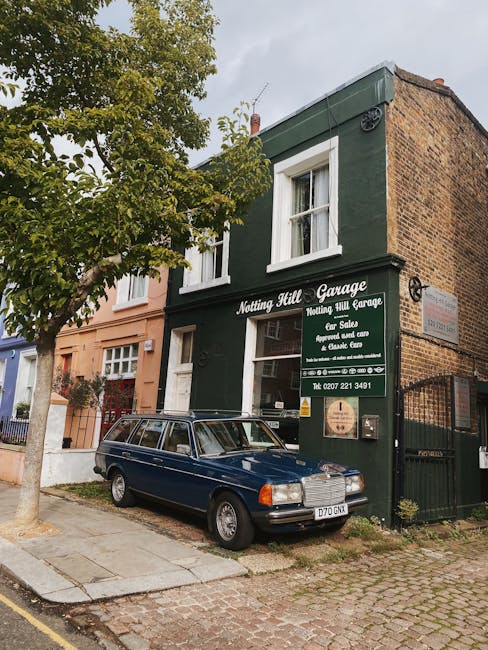
Avoid Move-Day Delays in W11: Parking & Suspension Tips
Moving house is stressful enough without a van circling the street, a neighbour blocking the kerb, or a suspended bay you only noticed after breakfast. If you are trying to avoid move-day delays in W11, parking and suspension tips can save you a surprising amount of time, money, and last-minute panic. Truth be told, most move-day problems in West London are not dramatic disasters. They are little practical issues that snowball: a missed restriction, a poor parking choice, a permit left too late, or a loading bay that looked available but wasn't. One small oversight and suddenly the whole timetable slides.
This guide breaks down what to do, why it matters, and how to plan the move properly in Notting Hill and the wider W11 area. You will find straightforward advice on parking suspensions, controlled parking zones, loading access, timing, and the kind of checks that help removals teams keep things moving. It is written to be useful whether you are moving from a basement flat, a top-floor maisonette, or a family home with a tight street outside. And yes, there is a lot less drama if you handle the parking side early.
For practical support around planning, pricing, and service expectations, you may also find the company's pricing and quote information, terms and conditions, and insurance and safety guidance useful while you arrange the move.
Table of Contents
- Why Avoid Move-Day Delays in W11: Parking & Suspension Tips Matters
- How Avoid Move-Day Delays in W11: Parking & Suspension Tips Works
- Key Benefits and Practical Advantages
- Who This Is For and When It Makes Sense
- Step-by-Step Guidance
- Expert Tips for Better Results
- Common Mistakes to Avoid
- Tools, Resources and Recommendations
- Law, Compliance, Standards, or Best Practice
- Options, Methods, or Comparison Table
- Case Study or Real-World Example
- Practical Checklist
- Conclusion
- Frequently Asked Questions
Why Avoid Move-Day Delays in W11: Parking & Suspension Tips Matters
In W11, parking is rarely simple. Streets can be narrow, bays can be heavily used, and timings matter more than many people expect. A removals van may need close access to the front door, room to open tail lifts, and enough clear space for movers to carry furniture safely. Without that, even a straightforward move can drag on. You might only be moving a few streets away, but if the van ends up two corners down the road, every wardrobe, box, and mattress has to be walked further. That is tiring, slow, and avoidable.
The parking side matters because move-day delays usually come from access, not loading itself. A parked car on the wrong stretch, an unrestricted bay that turns out to be full, or a suspension sign that appears after you have already planned the route can all create friction. In busy parts of Notting Hill, that friction can become a real bottleneck. And once the day is underway, there is not much patience left for guesswork.
There is also a safety angle. Longer carrying distances increase the chance of bumps, dropped items, and awkward turns on stairs or pavements. That affects your belongings, the team, and your own stress levels. If you are trying to keep the day calm, which is probably the dream, parking and suspension planning is not a side note. It is part of the move itself.
One thing people often overlook: neighbours and local traffic. When a van is blocking access, the whole street feels it. Planning well shows respect for everyone around you, and it usually helps the move run with less tension. That can make the difference between a tidy handover and a day of apologising at the kerb.
How Avoid Move-Day Delays in W11: Parking & Suspension Tips Works
At a practical level, avoiding delays means matching three things: where the vehicle can legally stop, how long it can stay there, and whether the space is suitable for unloading. In many W11 streets, that means thinking about controlled parking zones, loading restrictions, shared bays, resident bays, and any temporary suspension needed for your move.
The general process is simple, though the details can be fiddly:
- Check the parking rules for the exact street outside both addresses.
- Identify the most realistic place for the removals vehicle to stop.
- Decide whether a bay suspension or other parking arrangement is needed.
- Build the timing around access windows, building entry times, and lift or concierge rules if relevant.
- Confirm everything again a few days before moving, because these things do change.
Parking suspensions are especially useful where the best loading spot is usually occupied or needs to be reserved for the van on the day. In plain English, a suspension temporarily removes a bay from normal use so the vehicle has a clear place to stand. That can reduce walking time and help movers keep the job moving smoothly. It also makes the street easier to manage, especially when the van is large or the property sits in a tight terrace or mansion block.
Still, the suspension itself is only part of the plan. You need to understand how it will be marked, when it starts, and whether the removals vehicle will actually fit the available space. A suspension that is too short, too far away, or positioned badly can create more hassle than it solves. The aim is practical access, not paperwork for its own sake.
If you are booking a professional removals team, it helps to share access details early. Good movers will want to know about narrow roads, one-way systems, basement steps, timed building access, and whether the loading point is on the same side as the property. For company background and service approach, the about us page gives a helpful sense of who is behind the service, while the health and safety policy is worth a look if you want to understand how safe handling is approached.
Key Benefits and Practical Advantages
Good parking and suspension planning sounds small, but it creates real benefits on the day. The biggest one is time. If the van can park close to the entrance, the loading rhythm stays steady. Boxes move faster, heavy furniture has a shorter route, and the whole job feels less like a relay race. Nobody enjoys carrying a sofa through two sets of gates and along a crowded pavement. Let's be honest, no one.
There is also a cost benefit. Delays can mean extra labour time, longer vehicle idling, and more risk of having to revisit the site or rearrange the schedule. Even when a removals company is efficient, access problems can still create knock-on effects. So planning ahead helps protect the budget as well as the timetable.
Other practical advantages include:
- Less physical strain: shorter carrying distances reduce fatigue.
- Better protection for belongings: fewer awkward transfers and less chance of impacts.
- Smoother communication: everyone knows where to go and when.
- Lower stress: fewer surprises tend to mean a calmer move.
- Cleaner street logistics: neighbours, pedestrians, and traffic are easier to manage.
There is a human benefit too. When the access plan is clear, you can focus on the bits of moving that actually need your attention, like keys, final meter reads, fragile items, and that one drawer full of random cables nobody seems to own. Small victories, but they matter.
Who This Is For and When It Makes Sense
This approach is useful for almost anyone moving in or out of W11, but it matters most when parking is limited, the street is busy, or the building access is awkward. If you are moving from a period conversion, a flat with no driveway, or a property on a narrow residential road, it makes sense to treat parking as a priority from the start.
It is also especially useful if:
- your property is inside a controlled parking zone;
- you expect the removals van to stay for more than a brief loading stop;
- you need a bay outside the property rather than around the corner;
- you live near a busy shopping street or school route;
- you are moving out of a shared block with strict concierge or lift timings;
- you have large, awkward, or high-value items to move safely.
It also makes sense for landlords, managing agents, and tenants coordinating end-of-tenancy moves. If the schedule is tight, there is very little room for a "we'll just wing it" approach. Winging it, in moving terms, usually ends with a van parked too far away and a very long first hour.
If you are comparing services, timing, and support levels, the pricing and quotes page is a useful place to understand what to expect before you lock anything in.
Step-by-Step Guidance
A sensible move-day access plan does not need to be complicated. It just needs to be done early and checked properly. Here is a practical way to handle it.
1. Confirm the exact pickup and drop-off locations
Start with the full address, but go one step further. Note the side of the street, the nearest junction, and whether there is a loading area or resident bay directly outside. A parking rule can change from one side of the road to the other. That is annoying, but it is how it goes.
2. Check the street restrictions in plain English
Look for signs on the street itself, building notices, and any rules from the property manager or landlord. If the street uses time-limited bays, resident bays, or loading-only windows, write those down. You do not need to become a traffic lawyer. You just need the basics nailed.
3. Decide whether a suspension is needed
If the usual legal parking options are unlikely to give the removals team enough room, a suspension may be the cleanest solution. This is often the case when the nearest bay is constantly occupied or when a larger vehicle needs direct access. In some moves, a suspension is more convenience than necessity, but in W11 the convenience often pays for itself in saved time.
4. Book well ahead and double-check timings
Do not leave parking arrangements to the last minute. Even if the move itself is flexible, access arrangements often are not. Confirm the dates, times, and exact vehicle position as early as possible, then check again closer to the day. A quick reminder call or email can prevent a messy surprise on the morning.
5. Share the plan with everyone involved
Make sure the removals team, anyone helping you move, and the building contact know the same plan. If the van needs a specific bay, say exactly which one. If access is from a rear service road or shared courtyard, explain that too. Mixed messages create wasted minutes, and minutes are what disappear first.
6. Prepare a backup option
Sometimes a reserved bay is blocked, or a neighbour parks somewhere unexpected. It happens. Have a fallback route or second-best loading point in mind so the move can keep going. A backup plan does not mean you expect trouble; it means you have seen enough moves to know real life can be a bit messy.
Expert Tips for Better Results
After enough moving days, a few patterns become obvious. The best outcomes usually come from small details handled early. Here are the tips that genuinely make a difference.
- Aim for front-door proximity, not just legal parking. A legal space is good, but one near the entrance is better if the street layout allows it.
- Measure the practical access point. Think about how far the team must carry items, where the doors open, and whether there are steps, railings, or tight turns.
- Check the weather. A rainy move in W11 is not rare, and wet pavements slow everything down. Even a light drizzle changes how carefully items need to be carried.
- Keep lift and entry timings aligned. If your building allows access only at certain times, make sure the parking plan matches that window.
- Label fragile items clearly and keep them near the exit. A clear loading route helps the team move faster without handling boxes twice.
One small but useful habit: stand outside the property and walk the route the movers will actually take. You notice things from pavement level that are easy to miss in a phone call. A low wall, a narrow gate, a tight turn near a parked car. Suddenly the plan makes more sense. It's a five-minute check that saves fifty later.
Also, keep communication calm and specific. "Park near the house" is vague. "Use the suspended bay directly outside number 18, on the left-hand side, if available" is better. More precise, fewer surprises.
If you want to understand how the company handles safe working practices, the insurance and safety page and the health and safety policy are sensible trust pages to review before booking.
Common Mistakes to Avoid
Most move-day delays are not caused by one giant failure. They are caused by a series of small missteps. Here are the ones that show up again and again.
- Assuming parking will be fine on the day. In W11, assumption is a risky hobby.
- Forgetting to check both addresses. The drop-off street can be just as tricky as the pickup street.
- Leaving parking arrangements too late. Some issues cannot be fixed at 7:30 a.m. on moving day, however optimistic everyone feels.
- Not telling the removals team about stairs, narrow access, or rear entrances. A good crew can adapt, but only if they know what they are adapting to.
- Choosing the closest bay without checking if it is actually usable. Closest does not always mean easiest.
- Ignoring neighbours and building rules. It is better to manage access politely than to create friction that slows everything down.
Another common issue is underestimating how long the first part of the move takes. People often think the van will be packed and gone in a flash. Then the first three bulky items arrive, the corridor is tighter than expected, and everyone realises the schedule needs breathing room. That is normal. Better to plan for a slightly slower start and be pleasantly surprised.
Tools, Resources and Recommendations
You do not need fancy software to manage a move well. Most of the useful tools are basic, but they are effective. A phone with notes, a printed checklist, a tape measure, and a couple of clear photos of the street can go a long way.
| Tool or Resource | What It Helps With | Why It Matters |
|---|---|---|
| Phone photos of the street | Showing parking layout and access points | Helps the removals team plan before arrival |
| Notes app or paper checklist | Tracking times, restrictions, and contacts | Reduces forgotten details on the day |
| Tape measure | Checking furniture and access widths | Prevents tight squeezes and wasted lifting |
| Building contact details | Entry rules and timing coordination | Stops delays at doors, lifts, and gates |
| Removals terms and service pages | Understanding scope, timing, and responsibilities | Sets expectations clearly before booking |
There is also value in reading the practical policy pages before moving day. The payment and security page helps if you want a clear sense of how payments are handled, while the recycling and sustainability page is useful if your move includes items you no longer want to keep. Decluttering before the move can make access simpler too. Fewer items, less loading, less stress. Simple really.
If anything about the booking process is unclear, the safest next step is usually direct contact. A quick conversation is often faster than guessing. You can use the contact us page for that.
Law, Compliance, Standards, or Best Practice
Parking rules and suspension arrangements in London can vary by borough, street, time of day, and property type. Because of that, it is best to treat this topic as a practical compliance issue rather than a one-size-fits-all rule. The exact parking conditions for your move should always be checked against the street signage, the relevant local arrangements, and any instructions from your property manager or landlord.
Best practice is straightforward:
- follow posted parking signs and time restrictions;
- do not assume loading is permitted just because the van is moving goods;
- make sure any suspension or reserved space is arranged correctly in advance;
- keep vehicles within the agreed area and time window;
- leave room for pedestrians, emergency access, and neighbour movement where possible.
From a removals perspective, good practice also means safe lifting, clear access routes, and honest communication about what the property needs. If a move looks complicated, that is not a reason to panic. It is a reason to plan carefully and keep the paperwork tidy. That is especially true for shared buildings, conservation streets, and narrow residential roads where access can shift from easy to awkward in a heartbeat.
If you want more detail on how the company frames responsibilities and service expectations, the terms and conditions page is a sensible reference point.
Options, Methods, or Comparison Table
Different moves call for different access approaches. The right choice depends on how busy the street is, how far the loading point is from the property, and how long the van needs to stay on site.
| Method | Best For | Pros | Trade-Offs |
|---|---|---|---|
| Standard legal parking nearby | Short, simple moves with easy access | No special arrangement, flexible if available | May be too far from the entrance or unavailable |
| Temporary parking suspension | Tight streets and direct loading needs | Closer access, less carrying, more control | Needs planning and confirmation in advance |
| Loading bay use | Properties near designated loading areas | Efficient if rules match move timing | Time-limited, may be shared or heavily used |
| Rear access or service road | Buildings with practical back access | Can be quieter and easier for large items | Often overlooked, sometimes harder to coordinate |
In many W11 moves, the best answer is not one method alone but a combination: park as close as the street allows, reserve space if needed, and have a backup plan if the first option is blocked. That balanced approach tends to work best in real life, not just on paper.
Case Study or Real-World Example
A typical W11 move might look like this. A couple is moving from a third-floor flat in a Victorian terrace near a busy residential road. The property has no driveway, the street has resident parking, and there is usually a car parked directly outside the front door by mid-morning. On paper, it seems manageable. In practice, it is exactly the sort of move that can stall if nobody has thought through access.
They start early and speak to the removals team a week ahead. They confirm the exact frontage, note the tight stairwell, and arrange a temporary bay suspension close to the property. On the day, the van arrives at the agreed time, the loading point is clear, and the first round of boxes is out within minutes. There is still work to do, of course. There always is. But there is no wasted half hour hunting for a space or shifting the van twice because a neighbour's car was in the way.
The result is not dramatic. That is the point. The move feels ordinary, which is usually the best possible outcome. No scrabbling. No apologising to neighbours. No last-minute parking puzzle. Just a steady, well-managed move with less noise and less fuss. If you have ever tried to carry a heavy mirror along a cramped pavement while keeping an eye out for oncoming traffic, you will know why this matters.
Practical Checklist
Use this checklist in the final days before moving. It is simple on purpose.
- Confirm both addresses and exact access points.
- Check street parking rules for pickup and delivery.
- Decide whether a bay suspension or reserved space is needed.
- Share property entry instructions with the removals team.
- Note lift access, staircase width, and any fragile access points.
- Take photos of the frontage, bays, and nearest junctions.
- Keep phone numbers for the removals team and building contact handy.
- Prepare keys, permits, and any access cards in one place.
- Check weather and allow a bit of extra time if conditions are poor.
- Walk the route from the van to the front door before unloading begins.
Expert summary: The most reliable way to avoid move-day delays in W11 is to treat parking and suspension planning as part of the move, not an admin task. If the van can park legally, safely, and close enough to the entrance, everything else tends to flow much better.
And if you are still unsure, that is completely normal. Move-day logistics can feel a bit relentless. The good news is that most problems are preventable once you slow down and check the access details properly.
Get a free quote today and see how much you can save.
Conclusion
Move-day delays in W11 are rarely caused by one huge mistake. They usually come from small access issues that were never pinned down early enough. Good parking planning, sensible use of suspensions where needed, and clear communication with your removals team can turn a stressful day into a manageable one. Not effortless, perhaps. But manageable, which is what most people really want.
Take the street seriously, check the restrictions twice, and make sure the van has the easiest possible route to your door. That one bit of preparation can save a lot of heavy lifting, a fair amount of muttering, and quite a few minutes you would rather spend on the other side of the move. If you do it properly, the day feels less like a scramble and more like a process. And honestly, that is a relief in itself.
Frequently Asked Questions
Do I always need a parking suspension for a move in W11?
No, not always. Some moves can be handled with ordinary legal parking or a loading bay. A suspension is most useful when the street is busy, space is limited, or the removals vehicle needs to stay close to the property for a while. The decision really depends on the street layout and the amount of access you need.
How far in advance should I arrange parking or suspension plans?
As early as possible. The earlier you confirm access arrangements, the easier it is to align the removals schedule, building rules, and vehicle timing. Leaving it until the final few days can make simple issues much harder to fix.
What happens if the van cannot park directly outside?
If the van has to park further away, the team will usually need longer to carry items to and from the property. That can slow the move and add strain. A fallback plan is useful, but it is much better to reduce the walking distance where possible.
Can I just use my visitor bay or resident bay on moving day?
Sometimes, but only if the rules allow it. Parking permissions vary, and a bay that looks convenient may still be restricted. Always check the exact street signs, any building rules, and any permit requirements before assuming the space is available.
What should I tell the removals team before moving day?
Give them the full address, access details, stair information, lift timings, parking restrictions, and whether a suspension is in place. It also helps to share photos of the frontage and any tight areas. The more specific you are, the fewer surprises there are later.
Are W11 streets especially difficult for removals parking?
Many W11 streets can be tight or heavily used, especially around residential terraces and mixed-use areas. That does not mean moves are difficult by default, but it does mean access should be planned carefully. A little extra preparation goes a long way.
Does a suspension guarantee the van will have space?
It helps a great deal, but it is still wise to check the exact marking and timing. A suspension should create the intended space, but practical checks on the day are still important. Real streets are not always as tidy as the plan on paper.
What if a neighbour parks in the suspended space?
That can happen. It is frustrating, but having photos, confirmation details, and a clear contact plan can help you respond quickly. A backup loading spot is useful too, just in case the original space is blocked.
How can I reduce delays if I live in a flat with no direct frontage access?
Focus on the shortest practical route from the vehicle to the entrance. Check building access times, stairwells, lifts, and whether any service entrance can be used. Good coordination matters more in flats because one awkward detail can slow the whole move.
Is it worth paying more for better access planning?
Usually, yes, if it saves time and avoids repeated handling. Better access planning often pays for itself through a smoother day, fewer delays, and less risk of accidental damage. It is one of those things that feels optional until you need it.
Where can I check the company's service and trust information?
You can review the about us page, along with the health and safety policy, insurance and safety, and terms and conditions. Those pages help set expectations before you book.
What is the best first step if I am not sure about parking in my street?
Start by checking the exact signs outside the property and then speak to the removals team with clear details. If needed, use the contact us page to ask for guidance. A short conversation now is far easier than a parking scramble on moving day.